
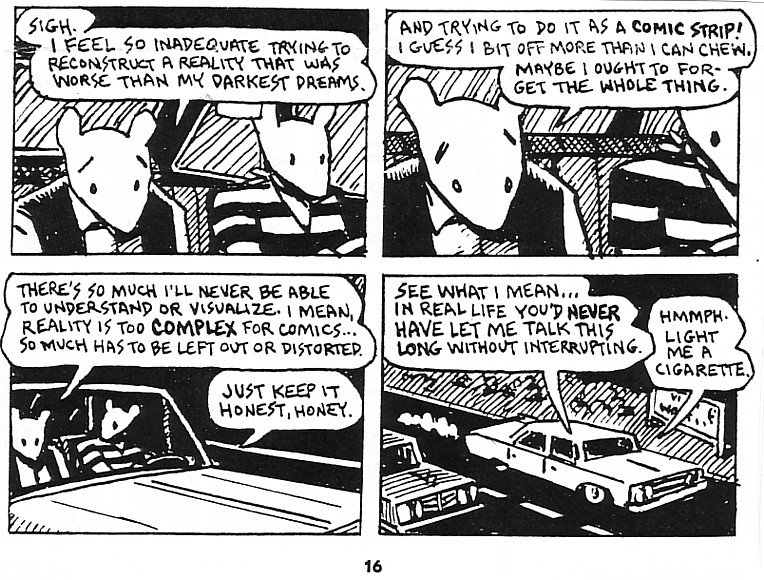
The story of Maus begins from around the 1930's and eventually leads up to 1944, and follows Vladek and his son, who interviews his father about his persecution by the Nazi's during World War II. The story sifts seamlessly between past and present as Art Spiegelman, the son, conducts his interview with his father over the years. At first Vladek's stubbornness and other touchy personality traits didn't really bother me, but as they became more obvious it started to bother me more how he had become like this when he had seemed to be such a different, happier person in the past. This story isn't like any normal historical literature. I think it's a really interesting take on history to put it into comic-book form like this - it's from a secondary source, but since it's illustrated and following a character who was fleshed out in the beginning, it makes history seem so much more real. As the reader you felt more connected because of this, so the tragedy feels even more dramatic and heartfelt. The reader can understand and even relate to Vladek's persecution since we are connected with him from the beginning (a good decision on his son's part to not just put in the history like any old history textbook. The bitterness Art's father exuded really did bother me after awhile though, in part because I remember when this wonderful lady named Patricia who had survived the Holocaust came to my school in 8th grade to give our class a talk about it and her experience, and she was one of the most lively and happiest people - she hadn't let this experience shape her whole life and bring her down, she had moved on and only told her story as a means to share information to a new generation. I feel like Vladek could've learned from another Holocaust survivor like this, one who put her horrible experiences behind her and knew the rest of her life she was would from then on could only be so much better.

No comments:
Post a Comment